
Professional Paver Patio Installation in Palatine, IL
Paver Patio Installation in Palatine, IL
A&N Outdoor Services installs paver patios designed around Illinois soil conditions, freeze–thaw cycles, and drainage behavior. We build patios that stay solid, drain properly, and hold their shape long after the first season.
Outdoor spaces built with structure, stability, and long-term performance
A good patio doesn’t start with pavers; it starts with the ground beneath them. Most DIY patios in Palatine fail because the base shifts, the soil wasn’t compacted, or water was never given a clear path to travel. When that happens, the surface settles unevenly. Corners lift. Joints wash out. The entire patio becomes a reminder that shortcuts always show up later. A patio should be simple to enjoy and strong enough to forget about. That’s how we build them.
Testimonials
Client Success Stories
Trustindex verifies that the original source of the review is Google. We never had a bad experience yet. Alex and Nikko have been very responsive and very easy to deal with.Posted onTrustindex verifies that the original source of the review is Google. I am beyond satisfied with the service I received from A&N! Boy, they went above and beyond what I thought they were going to do! So thorough even though I had a ridiculous amount of leaves and weeds. It was really difficult with the wind today yet they went back and did everything to make it as clean as possible. I gladly recommend A&N and plan on retaining them in the spring for regular service. One very happy customer 😊Posted onTrustindex verifies that the original source of the review is Google. The A&N team was great to work with from quote to completion of the job. They did quality work at a very reasonable price. I’d recommend them to anyone.Posted onTrustindex verifies that the original source of the review is Google. We had A&N come by to do a fall cleanup. The crew that came by was very pleasant and did a great job.Posted onTrustindex verifies that the original source of the review is Google. Did a great job with our fall cleanup! Efficient and thorough. Will be using again!Posted onTrustindex verifies that the original source of the review is Google. Fantastic group. Made my house look fantastic. This is my second season with them working on my yard and it's never looked betterPosted onTrustindex verifies that the original source of the review is Google. Arturo and Jerry were just here cleaning up all the leaves from what must have been the whole neighborhood covering our lawn and driveway. They were so quick and awesome and really friendly too. The lawn looks great and I didn't have to spend 5-10 business days raking it myself. Scheduling was great, and cost was very reasonable. Really happy with their services. I highly recommend.Posted onTrustindex verifies that the original source of the review is Google. Service was absolutely amazing. Will definitely use these guys every year for my fall cleanup!Verified by TrustindexTrustindex verified badge is the Universal Symbol of Trust. Only the greatest companies can get the verified badge who has a review score above 4.5, based on customer reviews over the past 12 months. Read more
We Understand Soil Condition of Palatine
This part of Illinois sits on clay-dominant soils that hold water at the surface but resist deep absorption. Clay expands when wet and contracts when dry, which causes heaving during winter. Most patios fail because the base wasn’t designed to handle this movement. A patio built here must account for:
Freeze–Thaw Expansion
Illinois winters create constant upward and downward soil pressure. Without proper base depth and compaction, the pavers shift.
Soil Density & Compaction Needs
Clay needs controlled compaction and a thicker base layer to prevent settling.
Drainage Requirements
Flat yards and older suburbs in Mount Prospect often have slow water movement. A patio must direct water away from the house and into planned channels.
Surface Load Expectations
Different areas of a patio need different base requirements—foot traffic, grills, seating walls, dining sets, and fire pits all apply pressure differently.
Sun & Shade Distribution
Temperature differences across the patio surface affect material behavior. Shaded edges expand differently than sun-exposed centers.
We build patios that anticipate all of this instead of reacting to it later.
Our Paver Patio Installation Process
Structured, careful, and built on hardscape engineering—not guesswork.
1. Site Assessment & Grade Mapping
We start by walking your yard and mapping out:
- Soil type and compaction characteristics
- Existing grade and slope direction
- Water flow patterns during storms
- Foundation proximity and elevation
- Root systems from nearby trees
- Planned use of each section of the patio
- Access paths for excavation and material delivery
This step determines how stable your patio will be years from now.
2. Excavation to the Proper Depth
A typical patio base in Illinois requires:
- 7–9 inches of excavation for foot-traffic areas
- 10–12 inches for patios supporting fire pits, seating walls, or heavy furniture
- A final patio elevation that slopes 1/8 inch per foot away from the home
We remove all topsoil, roots, and organic material. You cannot build a patio on topsoil—it shifts, settles, and collapses under pressure.
3. Base Preparation: The Core of a Long-Lasting Patio
This is where most patios fail, so it’s where we spend the most time.
Base Material (CA-6 or crushed limestone) – We install a compacted base layer made of angular stone that locks together under pressure. This creates a stable platform resistant to freeze–thaw movement.
Layered Compaction – We compact in thin lifts—not one thick layer. Each lift receives:
Plate compaction
Moisture conditioning (if needed)
Testing for density and movement
A stable base doesn’t shift. It distributes load evenly across the surface.
Geotextile Fabric (when needed) – We use landscape fabric to separate clay soil from the base stone. This prevents mixing, which protects the base from sinking.
Edge Stability Planning – Before installing pavers, we prepare for the final restraint system that locks the edges in place. Without this, pavers drift over time.
4. Bedding Layer Installation
Above the compacted base we place a 1-inch layer of bedding sand (or ASTM C33 leveling sand). This layer supports fine adjustments to ensure smooth, even placement of pavers.
We screed it precisely. No dips, no ridges. The surface must remain undisturbed until pavers are placed.
5. Laying the Pavers
We install:
- Concrete pavers
- Brick pavers
- Permeable interlocking pavers
- Natural stone (if requested)
We follow manufacturer laying patterns to ensure structural integrity:
- Running bond
- Herringbone (strongest for stability)
- Basket weave
- Randomized patterning
Pavers are placed by hand with consistent joint spacing. This keeps the patio visually aligned and structurally sound.
6. Cutting, Bordering & Edge Restraints
Borders matter. They keep the patio from drifting outward under pressure.
We install:
- Rigid or flexible edge restraints
- Paver spikes
- Cut-to-fit perimeter pieces
Every cut is measured to blend smoothly with the pattern—no awkward gaps or mismatched joints.
7. Polymeric Sand Application
We sweep polymeric sand into the joints, activate it with water, and allow it to lock the entire system together.
This strengthens the patio by:
- Preventing weed growth between joints
- Stopping ant tunneling
- Reducing water infiltration
- Limiting joint washout during heavy rainfall
8. Final Compaction
We compact the entire patio surface again using a protective buffer to avoid damaging the pavers.
This final step locks the system into place.
9. Clean-Up & Walkthrough
You see exactly how the patio was built, how the drainage works, and how to maintain it. Once installed, your patio is ready to use.
Types of Paver Patios We Build
Standard Paver Patios
Simple layouts with clean lines and balanced patterns.
Outdoor Dining Patios
Built with stable surfaces that support tables, chairs, and grills.
Patios with Seating Walls
Integrates hardscape blocks to add structure and functionality.
Fire Pit Patios
Designed with heat-resistant pavers and reinforced bases.
Permeable Paver Patios
Permeable Paver Patios
Multi-Level Patios
For yards with slopes or grade variations.
Walkways, Connections & Extensions
Built to match the patio surface for a seamless look.
Every project is designed for longevity, drainage performance, and aesthetic clarity.
Why Paver Patios Perform Better in Palatine
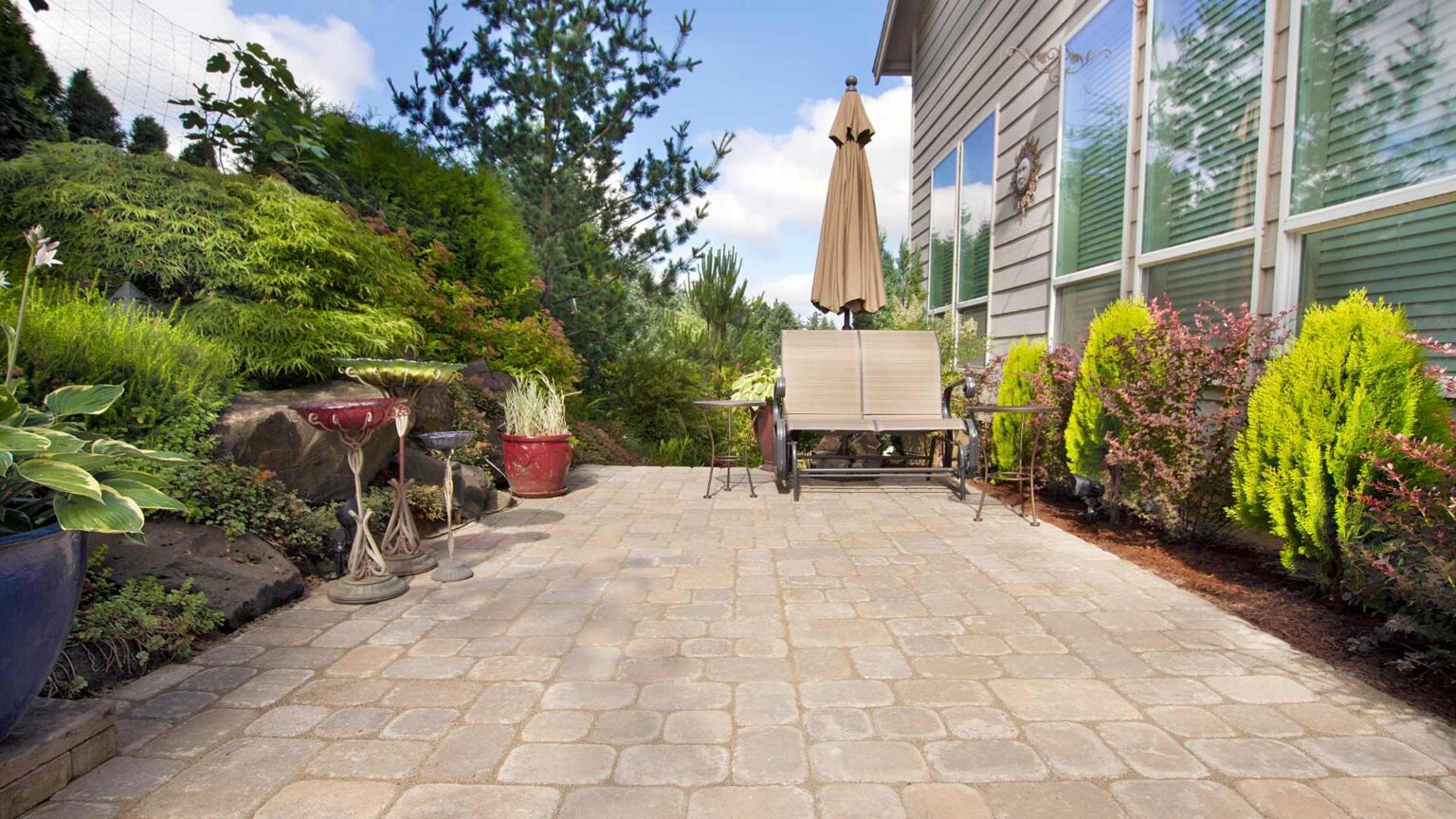
Concrete slabs crack. Gravel pads sink. Wood decks require constant maintenance. Pavers solve most long-term outdoor living problems because they form a flexible interlocking system that reacts to Illinois’s seasonal movement without failing.
Advantages of Paver Systems
- Stronger resistance to freeze–thaw cycles
- Easier repair — single pavers can be replaced without demolition
- Higher permeability for water movement
- More color and texture options
- Greater structural stability with a proper base
- No cracking like concrete slabs
- Long-term aesthetic consistency
A well-installed paver patio handles decades of weather without losing shape.
The Role of Drainage in Patio Performance
A patio is only as good as its drainage plan.
We incorporate:
- Positive Slope – Every patio slopes away from the house at a controlled grade.
- Perimeter Water Routing – We identify drainage outlets so water leaves the patio, not pools around it.
- Interface Protection – Where the patio meets the home, we protect the foundation from water exposure.
- Optional Permeable Systems – Ideal for yards with standing water problems.
- Adjacent Downspout Redirection – If a downspout drains toward your patio, we reroute or bury it.
Water movement determines structural lifespan. We design with that in mind.
Serving Palatine and the Northwest Suburbs
We install paver patios in:
- Mount Prospect
- Arlington Heights
- Des Plaines
- Elk Grove Village
- Glenview
- Rolling Meadows
- Wheeling
- Northwest Chicagoland neighborhoods
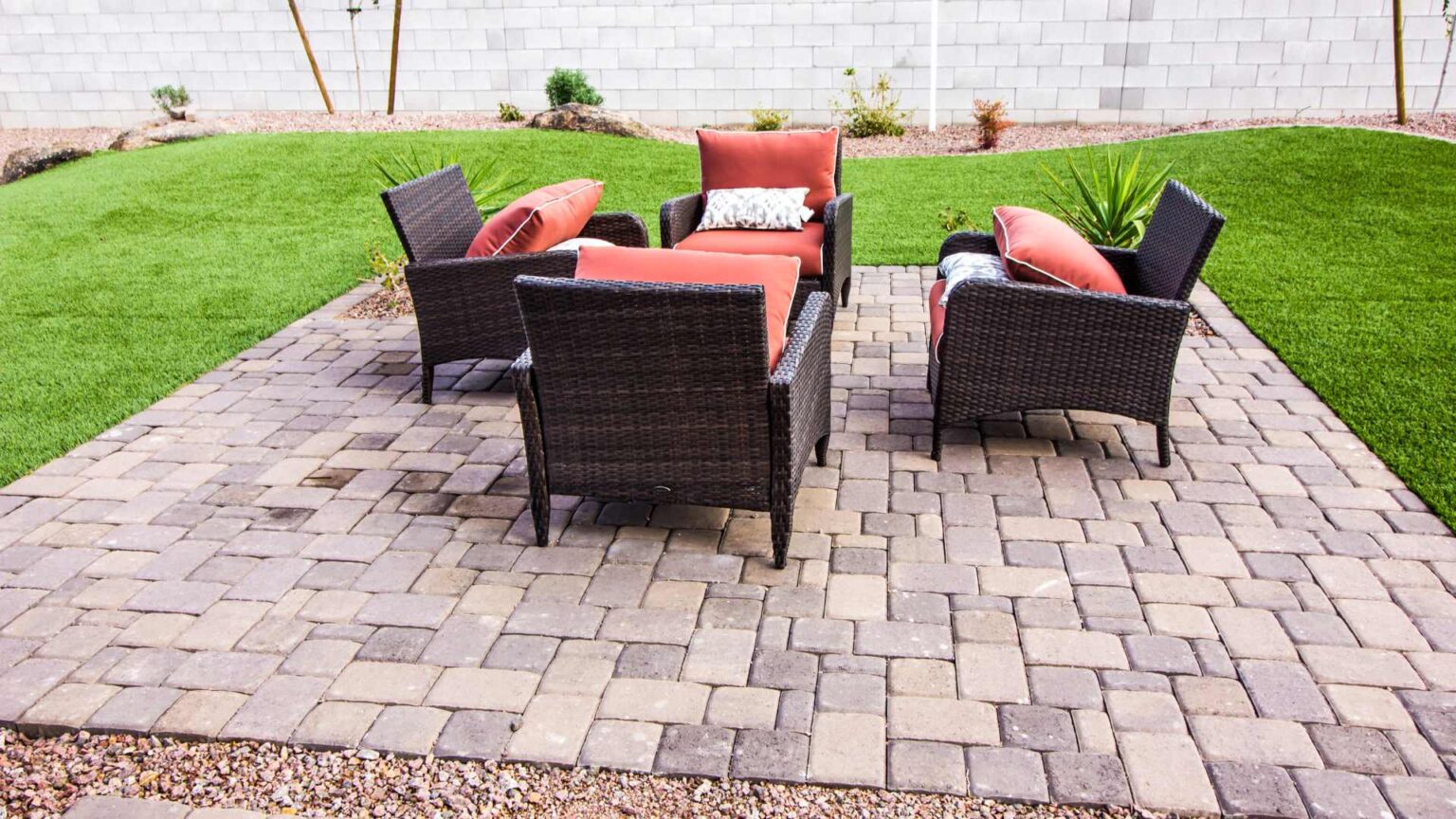
Each area has different soil, drainage, and shade patterns. Our designs adapt to those differences.
Built for Performance, Designed to Look Natural
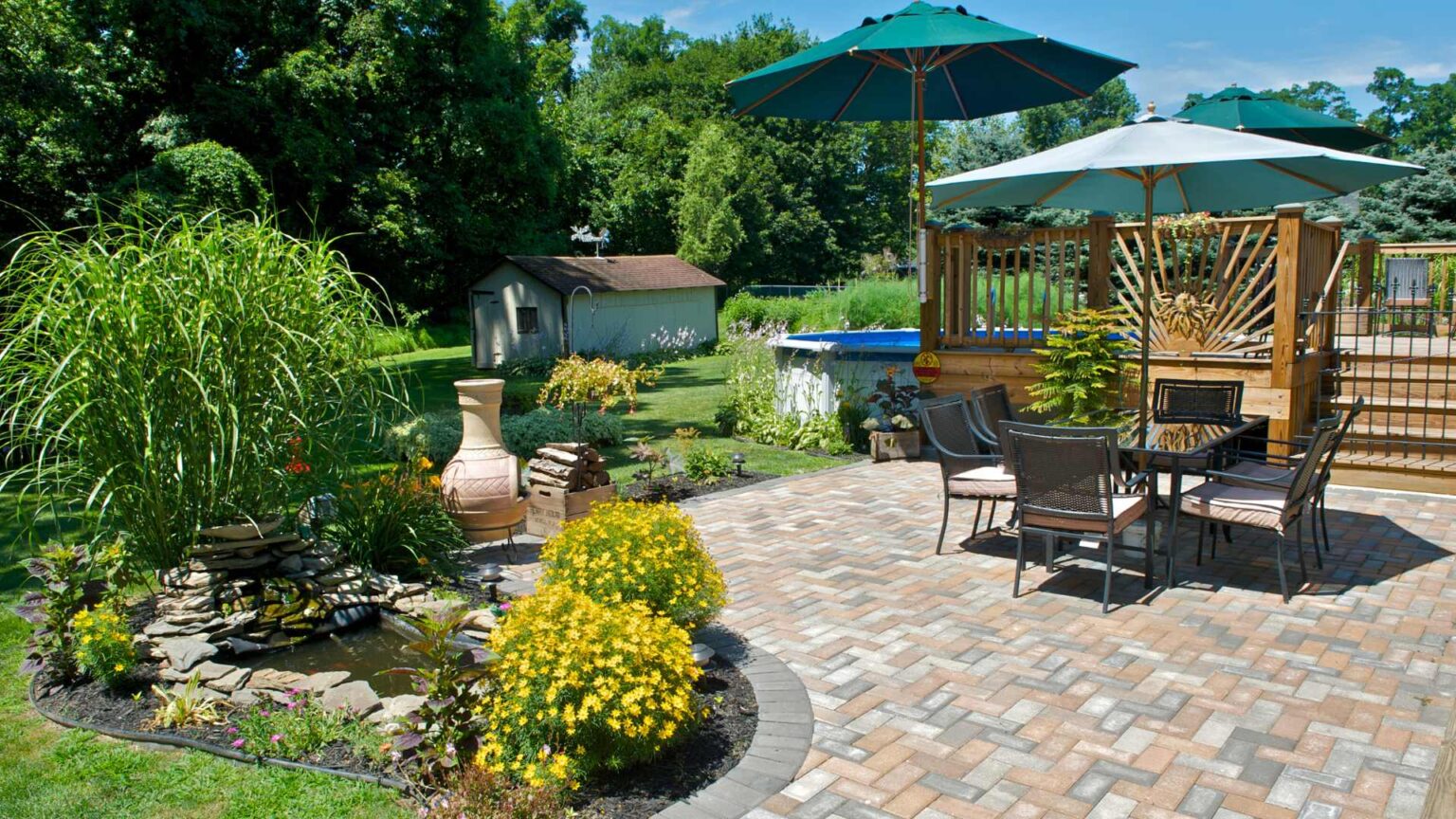
The best patios look like they belong to the yard—not like something added onto it.
We build patios that complement:
- Plantings
- Lawn edges
- Fencing
- Shade patterns
- Outdoor furniture layouts
- Fire features
- Retaining walls
- Existing walkways
A patio becomes an extension of your home, not a separate element sitting in the yard.
The Cost of Poor Patio Construction
A cheap patio becomes expensive quickly.
Common failure points we solve:
- Sinking edges
- Washed-out joints
- Paver shifting
- Heaving in winter
- Standing water
- Cracks in surrounding structures
- Uneven surfaces under furniture
These issues come from one thing: improper base preparation.
We prevent them before they exist.
Ready to Build a Patio That Stays Solid for Decades?
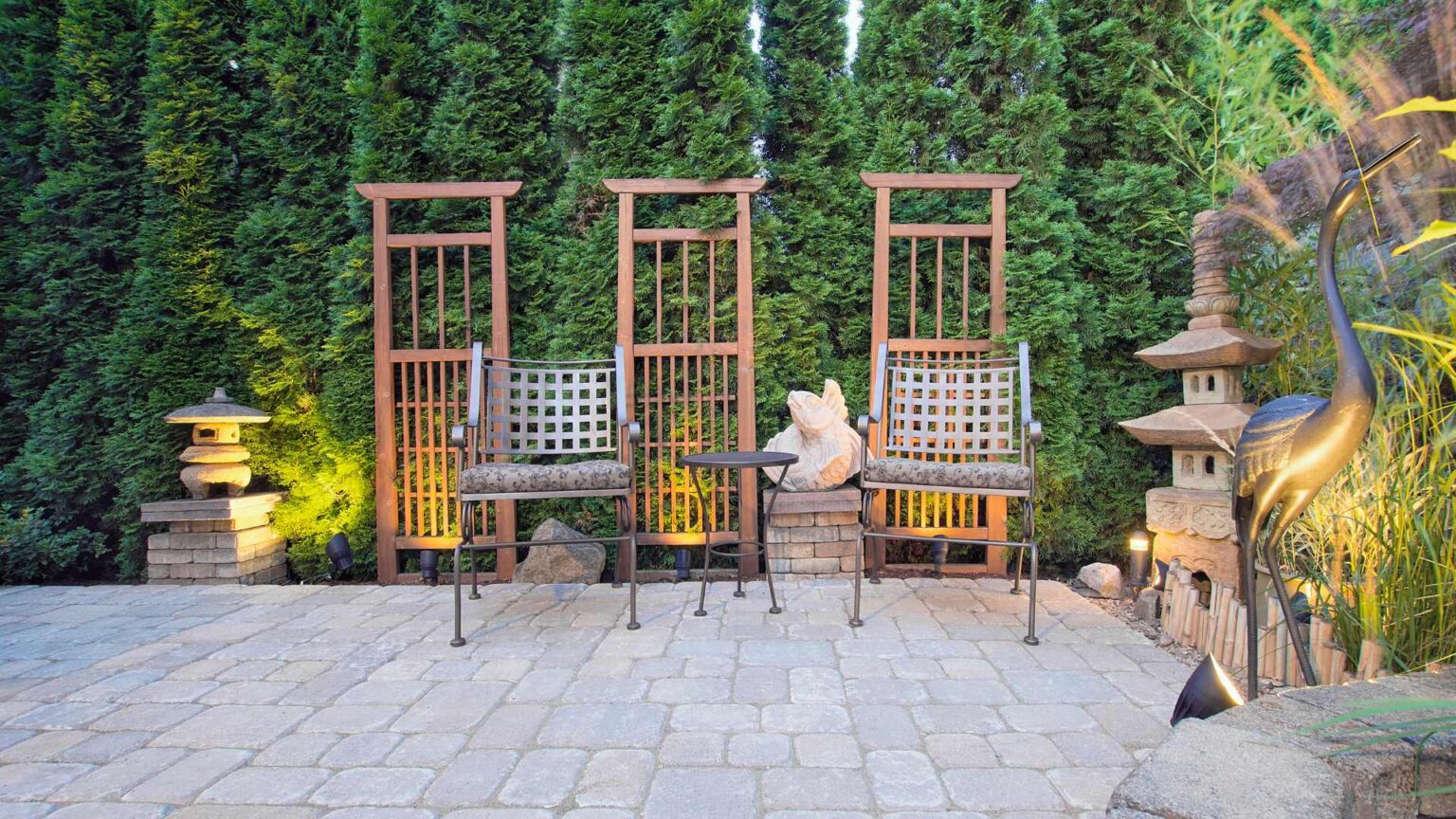
A&N Outdoor Services installs paver patios built with proper depth, compaction, drainage, and design clarity. You get a space that’s stable, level, and ready for daily use—without the maintenance headaches. Tell us what kind of patio you’re imagining. We’ll look at the yard, plan the layout, and build a system you won’t have to second-guess.
Request a Quote
A few details are enough to begin.