
Are you tired of dealing with waterlogged lawns and basements in Arlington Heights, IL? Reliable drainage solutions are crucial for maintaining the integrity of your property. A well-installed French drain can be the answer to your drainage woes.
At A&N Outdoor Services, we understand the importance of effective drainage systems. Our team provides comprehensive services, including French drain installation, designed to protect your home from water damage. With years of experience serving the northwest suburbs, including Arlington Heights, we tailor our drainage solutions to the local climate and soil conditions.
By installing a French drain, you can prevent lawn flooding, reduce standing water, and safeguard your basement or crawl space. Our experts will guide you through the process, from initial consultation to final cleanup, ensuring a seamless experience.
Key Takeaways
- Effective drainage solutions protect your property from water damage.
- French drain installation is tailored to local climate and soil conditions.
- A well-installed French drain can last over 20 years with minimal maintenance.
- Proper drainage improves property value and landscape health.
- Our team provides comprehensive drainage services, including installation and maintenance.
Understanding French Drains and Their Benefits
When it comes to managing water around your property in Arlington Heights, IL, understanding the role of a French drain is crucial. A well-designed drainage system is essential for protecting your home from water damage.
What is a French Drain?
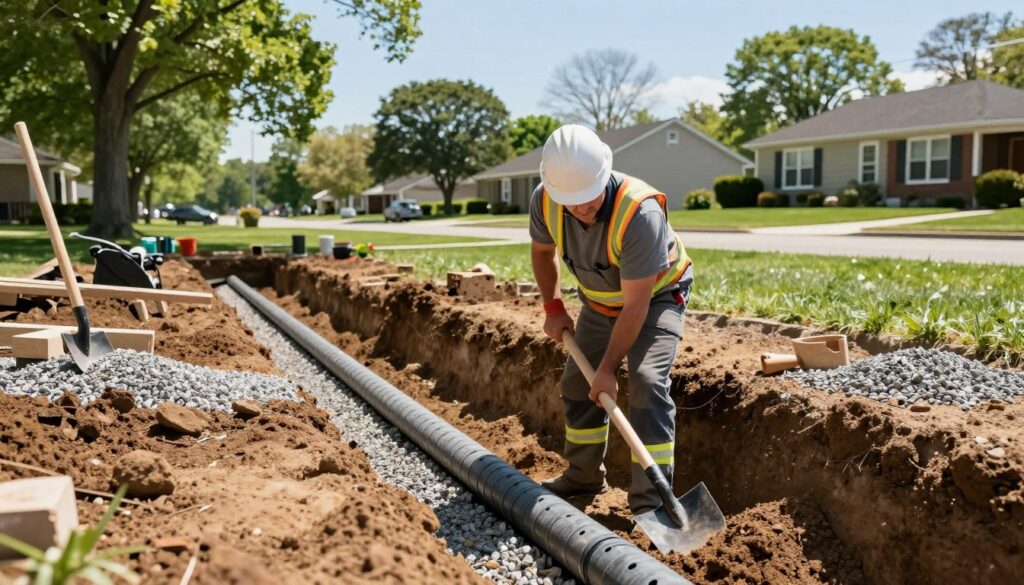
A French drain is a trench filled with gravel and a perforated pipe that redirects water away from a specific area. It’s a simple yet effective solution for drainage system installation. The perforated pipe collects water from the surrounding soil and directs it to a more suitable location, such as a storm drain or a natural slope.
Benefits of Installing a French Drain
Installing a French drain can provide numerous benefits, including:
- Preventing water accumulation around your foundation, which can lead to structural damage.
- Reducing the risk of basement flooding and associated costs.
- Minimizing the potential for mold and mildew growth due to excess moisture.
- Enhancing the overall drainage of your property, making it more resilient to heavy rainfall.
By installing a French drain, homeowners in Arlington Heights can enjoy a more secure and dry living environment.
Common Misconceptions About French Drains
Despite their benefits, there are several misconceptions about French drains. Some believe they are:
- Only necessary for properties with severe drainage issues.
- Too expensive to install.
- Difficult to maintain.
However, the truth is that French drains can be beneficial for many properties, regardless of the severity of their drainage issues. Moreover, the cost of installation can be offset by the long-term savings from preventing water damage. Regular maintenance is relatively straightforward, involving periodic inspections and cleaning.
By understanding the facts about French drains, homeowners can make informed decisions about their Arlington heights drainage services needs.
Signs You Need a French Drain in Arlington Heights
If you’re experiencing water-related issues around your property in Arlington Heights, it might be time to consider installing a French drain. A French drain is a simple yet effective solution to many common water drainage problems. In this section, we’ll explore the key signs that indicate you need a French drain.
Water Accumulation Around Your Foundation
One of the most common signs that you need a French drain is water accumulation around your home’s foundation. When water pools around the foundation, it can lead to serious structural issues over time. This water accumulation can be due to various factors, including heavy rainfall, improper grading of the yard, or clogged drainage systems.
To determine if you have a water accumulation problem, look for signs such as puddles or soggy areas around your home’s foundation, especially after rainfall. If you notice these issues, it’s crucial to address them promptly to prevent further damage.
Frequent Basement Flooding
Frequent basement flooding is another significant indicator that you might need a French drain. Basement flooding can result from various issues, including poor yard drainage, heavy rainfall, or a high water table. A French drain can help redirect water away from your home’s foundation, reducing the risk of basement flooding.
If you experience frequent it’s essential to identify the source of the problem and address it promptly. Installing a French drain can be a proactive step in preventing future flooding.
Mold or Mildew Issues
Mold or mildew issues in your home can be a sign of underlying water drainage problems. Excess moisture can lead to mold growth, which can have serious health implications. A French drain can help reduce moisture levels around your home by directing water away from the foundation.
If you notice mold or mildew in your home, particularly in areas prone to moisture such as basements or crawlspaces, it may be a sign that you need to improve your water drainage system. Consider consulting with top-rated drainage contractors to assess your needs.
| Signs | Description | Solution |
|---|---|---|
| Water Accumulation | Puddles or soggy areas around the foundation | Install a French drain to redirect water |
| Basement Flooding | Frequent flooding due to poor drainage or heavy rainfall | Implement a French drain to prevent future flooding |
| Mold or Mildew | Excess moisture leading to mold growth | Use a French drain to reduce moisture levels |
Choosing the Right French Drain System
With various French drain systems available, choosing the right one can be a daunting task without expert guidance. The process involves understanding the different types of French drains and determining which is best suited for your property in Arlington Heights, IL.
Types of French Drains Available
There are several types of French drains, each designed to address specific drainage needs. The most common types include:
- Interior French drains, which are installed inside the home to redirect water that accumulates around the foundation.
- Exterior French drains, which are installed outside the home to prevent water from reaching the foundation.
- Perimeter French drains, which surround the property to capture and redirect surface water.
Each type has its advantages, and the choice depends on the specific drainage issues you’re facing.
Factors to Consider for Your Property
When selecting a French drain system, several factors must be considered to ensure the chosen solution is effective and efficient. These include:
- The slope and grading of your property, which affect how water naturally flows.
- The soil type, as different soils have varying levels of permeability.
- The source and amount of water accumulation.
Considering these factors helps in designing a French drain system that is tailored to your property’s needs.
“A well-designed French drain system is not just about redirecting water; it’s about protecting your home’s foundation and enhancing the overall drainage of your property.”
The Importance of Professional Advice
Seeking professional advice is crucial in choosing the right French drain system. Experts can assess your property’s specific conditions and recommend the most appropriate solution. Affordable french drain installation services can provide valuable insights into the most cost-effective and efficient drainage solutions.
By consulting with professionals, you can ensure that your French drain system is designed and installed correctly, providing long-term protection against water damage and related issues.
The French Drain Installation Process
The installation of a French drain in Arlington Heights, IL, involves several key steps that ensure an efficient water drainage system. This process, while straightforward, requires careful planning and execution to effectively manage water accumulation around your property.
Step-by-Step Overview
The French drain installation process begins with identifying the area where water tends to accumulate. Once the site is selected, the next steps involve:
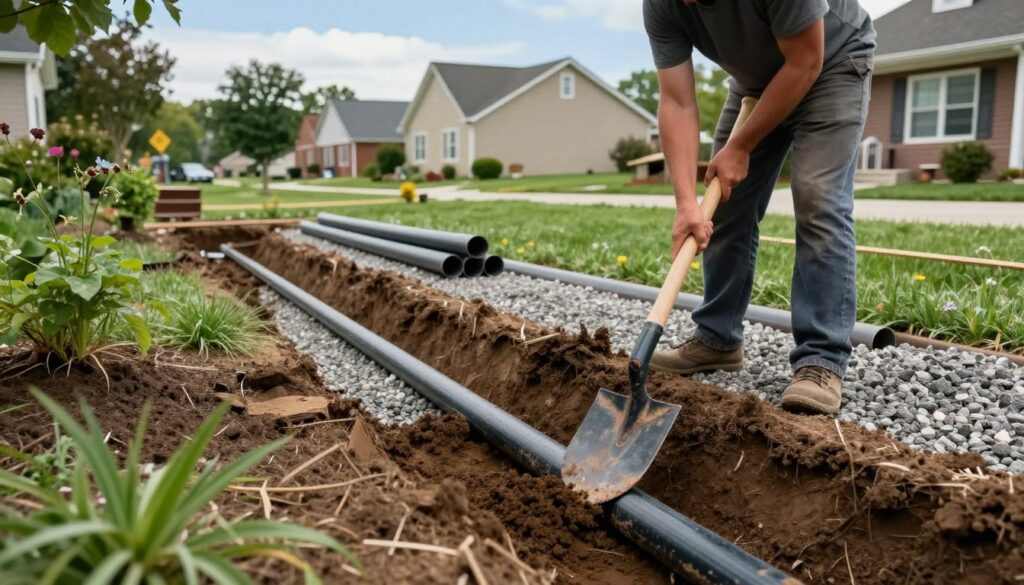
- Marking out the trench where the drain will be laid
- Digging the trench to the appropriate depth and width
- Laying a perforated pipe at the bottom of the trench
- Filling the trench with gravel to facilitate water flow
- Completing the surface with soil or landscaping
This step-by-step process ensures that the French drain functions optimally, directing water away from your property.
Tools and Materials Needed
To install a French drain, you’ll need several key tools and materials, including:
- A trencher or backhoe for digging
- Perforated pipe (typically PVC or corrugated plastic)
- Gravel or aggregate for filling the trench
- Landscape fabric to prevent clogging
- Basic hand tools like shovels and rakes
Having the right tools and materials on hand is crucial for a successful installation.
Timeline for Installation
The timeline for installing a French drain can vary depending on the complexity of the project and the size of the area to be covered. On average, a typical residential French drain installation can be completed within a few days. Factors that can influence the timeline include:
- The length and depth of the trench
- The type of soil and its condition
- Weather conditions during the installation
It’s essential to consult with a professional to get a more accurate estimate for your specific project.
DIY vs. Professional Installation: Which is Best?
When it comes to installing a French drain in Arlington Heights, IL, homeowners often find themselves torn between tackling the project themselves or hiring a professional. Both approaches have their merits and drawbacks, and understanding these can help you make an informed decision.
Pros and Cons of DIY Installation
Opting for a DIY French drain installation can be cost-effective and allows homeowners to have full control over the project. However, it requires a significant amount of time, effort, and expertise to execute correctly. Without proper knowledge, DIY installations can lead to ineffective drainage solutions or even cause more problems.
Key considerations for DIY installation:
- Assessing your yard’s drainage needs
- Understanding local regulations and permits required
- Having the right tools and materials
Advantages of Hiring a Professional
Hiring a professional for French drain installation offers several advantages, including expertise, efficiency, and warranty. Professionals have the necessary experience to assess your property’s specific needs and install a system that works effectively. For reliable drainage solutions, consider consulting with a local expert.
Professional installation benefits:
- Guaranteed work quality
- Compliance with local building codes
- Access to high-quality materials and equipment
Cost Comparisons and Budgeting Tips
The cost of French drain installation can vary significantly depending on whether you choose DIY or professional installation. While DIY might seem cheaper upfront, consider the potential for costly mistakes or the need for future adjustments. Professional installation, on the other hand, may have a higher initial cost but offers long-term reliability and peace of mind.
Budgeting tips:
- Get multiple quotes from professionals to compare prices
- Consider the cost of materials and tools for DIY projects
- Factor in potential future maintenance costs
For homeowners in Arlington Heights, IL, seeking Arlington heights drainage services, it’s essential to weigh these factors carefully and make an informed decision that suits your needs and budget.
Maintenance Tips for Your French Drain
To ensure your French drain operates at peak performance, regular maintenance is essential. A well-functioning French drain is crucial for directing water away from your property, thereby preventing water damage and potential health hazards.
Regular Inspections and Cleaning
Regular inspections are vital to identify any potential issues before they become major problems. It is recommended to inspect your French drain at least twice a year. During these inspections, check for any blockages, damage to the pipe, or issues with the drainage gravel.
- Clear any debris or sediment that may have accumulated in the drain.
- Check the outlet to ensure water is flowing freely.
- Inspect the pipe for any cracks or damage.
Cleaning the French drain involves flushing the system with water to remove any debris. For more stubborn clogs, a plumber’s snake or hydro-jetting may be necessary.
Signs of Clogs or Damage
Being aware of the signs of clogs or damage can help you address issues promptly. Common indicators include:
- Slow drainage or water pooling around the drain.
- Unpleasant odors emanating from the drain.
- Visible signs of erosion or settling around the drain.
If you notice any of these signs, it’s crucial to take action quickly to prevent further damage.
Seasonal Maintenance Tasks
Different seasons bring different challenges for your French drain. Here are some seasonal maintenance tasks to consider:
- Spring: Inspect the drain after winter for any damage caused by freezing temperatures.
- Summer: Check for debris and sediment buildup.
- Fall: Clear leaves and other organic matter that may clog the drain.
- Winter: Ensure the drain is clear before the onset of freezing temperatures.
By following these maintenance tips, you can ensure your French drain continues to function effectively, protecting your property from water damage.
In conclusion, maintaining your French drain is not just about ensuring it works; it’s about safeguarding your property. Regular inspections, prompt repairs, and seasonal maintenance are key to a long-lasting and effective drainage system.
Addressing Common Concerns with French Drains
When considering a French drain installation, several common concerns typically arise among Arlington Heights residents. These concerns can range from the effectiveness of French drains in different soil types to the impact on property drainage. In this section, we will address these common concerns and provide valuable insights to help homeowners make informed decisions.
Do French Drains Work in All Soil Types?
One of the primary concerns homeowners have is whether French drains are effective in all soil types. The answer is that French drains can be effective in most soil types, but their performance may vary depending on the soil’s composition and drainage characteristics. For instance, in soils with high clay content, water may not drain as quickly as in sandy soils. However, with proper design and installation by top-rated drainage contractors, French drains can be adapted to suit various soil conditions.
Here’s a breakdown of how French drains perform in different soil types:
| Soil Type | French Drain Performance |
|---|---|
| Clay | May require additional design considerations for optimal drainage |
| Sandy | Generally performs well due to good drainage characteristics |
| Loamy | Typically offers a balance between drainage and water retention |
How Long Does Installation Take?
Another concern is the duration of the installation process. The time required to install a French drain can vary significantly based on factors such as the size of the property, the complexity of the drainage system, and the availability of labor and materials. On average, a straightforward French drain installation can take anywhere from a few hours to a couple of days. However, more complex installations may require additional time.
To give you a better understanding, here’s an overview of the typical installation timeline:
- Assessment and Planning: 1-2 hours
- Trenching and Pipe Installation: 4-8 hours
- Backfilling and Testing: 2-4 hours
Can a French Drain Affect Property Drainage?
Homeowners often worry that a French drain might negatively impact their property’s drainage. However, when properly designed and installed, French drains are intended to improve property drainage by redirecting water away from areas where it tends to accumulate. This can help prevent water damage to foundations, basements, and landscaping.
In conclusion, while there are valid concerns about French drains, they can be an effective water drainage solution in Arlington Heights when properly installed and maintained. By understanding how French drains work in different soil types, how long installation takes, and their impact on property drainage, homeowners can make informed decisions about their drainage needs.
Local Regulations and Permits in Arlington Heights
Before installing a French drain, it’s essential to familiarize yourself with Arlington Heights’ local regulations and permit requirements. Compliance with these regulations is not only legally necessary but also ensures that your drainage solution is effective and safe.
Overview of Required Permits
In Arlington Heights, the type of permit required for a French drain installation can vary depending on the scope and location of the project. Typically, a permit is needed to ensure that the work complies with local building codes and zoning laws. It’s crucial to consult with the Arlington Heights Building Department to determine the specific permits required for your project.
The permit process usually involves submitting detailed plans of your proposed French drain system, including the materials to be used and the installation method. This allows the local authorities to assess the project’s compliance with local regulations.
Working with Local Authorities
Building a positive relationship with local authorities can streamline the permit process. It’s advisable to engage with the Arlington Heights Building Department early in your planning process to understand their requirements and address any concerns they may have.
Regular communication can help prevent misunderstandings and ensure that your project complies with all relevant regulations.
Ensuring Compliance
To ensure compliance with local regulations, it’s vital to work with a contractor who is familiar with Arlington Heights’ building codes and permit requirements. An expert drainage solutions provider can guide you through the process, from initial application to final inspection.
By choosing an affordable French drain installation service that understands local regulations, you can avoid potential legal issues and ensure that your drainage system operates effectively.
Finding a Reliable French Drain Installer in Arlington Heights
When it comes to installing an efficient water drainage system, hiring a reliable professional is crucial. In Arlington Heights, numerous drainage service providers offer French drain installation services, but selecting the right one can be daunting.
Researching Local Professionals
To find a trustworthy installer, start by researching local professionals who specialize in reliable drainage solutions. Look for companies with extensive experience in handling French drain installations in Arlington Heights.
Evaluating Reviews and Testimonials
Reading reviews and testimonials from previous clients can provide valuable insights into a company’s reputation and work quality. Check online review platforms to gauge the satisfaction level of their customers.
Requesting Quotes and Evaluations
Once you have shortlisted a few potential installers, request quotes and evaluations from them. Compare their prices, services, and timelines to determine which one best fits your needs and budget for Arlington heights drainage services.
FAQ
What is the average cost of a French drain installation in Arlington Heights, IL?
The cost of a French drain installation can vary depending on factors such as the size of the property, the complexity of the installation, and the materials used. On average, you can expect to pay between
FAQ
What is the average cost of a French drain installation in Arlington Heights, IL?
The cost of a French drain installation can vary depending on factors such as the size of the property, the complexity of the installation, and the materials used. On average, you can expect to pay between $1,500 to $3,000 for a professional French drain installation. However, it’s essential to get quotes from reliable drainage contractors to get a more accurate estimate.
How long does a French drain installation take?
The installation time for a French drain can vary depending on the complexity of the job and the size of the property. Typically, a professional installation can take anywhere from a few hours to a few days. Factors such as soil type, drainage system complexity, and weather conditions can influence the overall installation time.
Can I install a French drain myself, or do I need to hire a professional?
While it’s possible to install a French drain yourself, it’s often recommended to hire a professional for efficient water drainage system installation. Professionals have the necessary expertise, tools, and experience to ensure a proper installation, which is critical for the effective functioning of the drainage system.
Will a French drain affect my property’s drainage?
A properly installed French drain is designed to improve your property’s drainage by redirecting water away from the foundation and other areas. When installed correctly, a French drain can actually enhance your property’s drainage, reducing the risk of water accumulation and related issues.
Do I need a permit to install a French drain in Arlington Heights, IL?
Yes, you may need a permit to install a French drain in Arlington Heights, IL. It’s essential to check with local authorities to determine the specific regulations and permits required for your property. A reliable French drain installer can help guide you through the process and ensure compliance with local regulations.
How do I maintain my French drain to ensure optimal performance?
Regular maintenance is crucial to ensure your French drain functions correctly. This includes regular inspections, cleaning, and checking for signs of clogs or damage. Performing seasonal maintenance tasks, such as checking the drainage system’s condition after heavy rainfall, can also help maintain optimal performance.
Can a French drain be installed in all soil types?
French drains can be installed in various soil types, but the effectiveness may vary depending on the soil’s permeability and other factors. A professional French drain installer can assess your soil type and recommend the best solution for your property, ensuring a reliable drainage solution.
,500 to ,000 for a professional French drain installation. However, it’s essential to get quotes from reliable drainage contractors to get a more accurate estimate.
How long does a French drain installation take?
The installation time for a French drain can vary depending on the complexity of the job and the size of the property. Typically, a professional installation can take anywhere from a few hours to a few days. Factors such as soil type, drainage system complexity, and weather conditions can influence the overall installation time.
Can I install a French drain myself, or do I need to hire a professional?
While it’s possible to install a French drain yourself, it’s often recommended to hire a professional for efficient water drainage system installation. Professionals have the necessary expertise, tools, and experience to ensure a proper installation, which is critical for the effective functioning of the drainage system.
Will a French drain affect my property’s drainage?
A properly installed French drain is designed to improve your property’s drainage by redirecting water away from the foundation and other areas. When installed correctly, a French drain can actually enhance your property’s drainage, reducing the risk of water accumulation and related issues.
Do I need a permit to install a French drain in Arlington Heights, IL?
Yes, you may need a permit to install a French drain in Arlington Heights, IL. It’s essential to check with local authorities to determine the specific regulations and permits required for your property. A reliable French drain installer can help guide you through the process and ensure compliance with local regulations.
How do I maintain my French drain to ensure optimal performance?
Regular maintenance is crucial to ensure your French drain functions correctly. This includes regular inspections, cleaning, and checking for signs of clogs or damage. Performing seasonal maintenance tasks, such as checking the drainage system’s condition after heavy rainfall, can also help maintain optimal performance.
Can a French drain be installed in all soil types?
French drains can be installed in various soil types, but the effectiveness may vary depending on the soil’s permeability and other factors. A professional French drain installer can assess your soil type and recommend the best solution for your property, ensuring a reliable drainage solution.


