
Garden Bed Design Installation Mount Prospect, IL
Garden bed installation in Mount Prospect, IL is the process of converting lawn or bare ground into a defined planting area with prepared soil, edging, drainage, and plants sized for USDA zone 5b–6a. A typical residential garden bed installation runs 1 to 3 days and moves through 4 stages: garden design, site preparation, construction, and planting. The build gives a homeowner 3 measurable gains: better soil drainage than the heavy clay found across the Northwest Chicago suburbs, a 4 to 6 week longer growing window in raised beds because the soil warms earlier, and a clean edge that stops turf grass from creeping into the planting area.
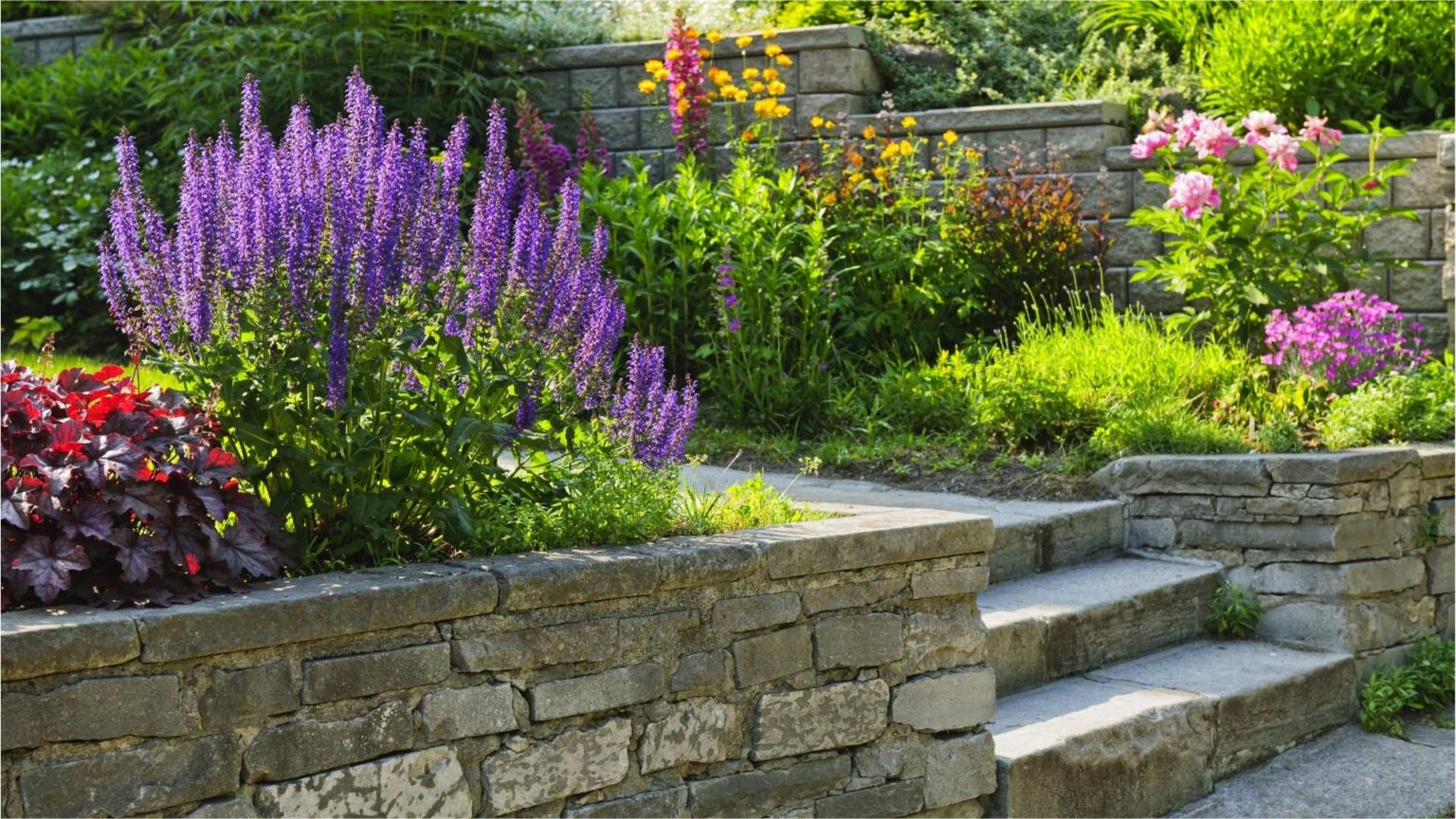
Garden Design
Garden design sets bed location, shape, soil volume, and plant list before any sod is cut. Site selection controls the outcome more than any other design choice, because sunlight hours determine what will grow. A vegetable garden needs 6 to 8 hours of direct sun, an herb garden needs 6 hours, and shade-tolerant perennial plants such as hosta and astilbe hold up in 3 to 4 hours.
Design decisions fall into 4 groups:
- Sunlight mapping records shade cast by the house, mature parkway trees, and fence lines at 9 a.m., noon, and 3 p.m.
- Drainage assessment finds where water sits after a storm; Mount Prospect lots carry dense clay subsoil that holds water, which pushes many beds toward a raised profile.
- Bed geometry fixes width at 3 to 4 feet (0.9–1.2 m) for single-sided access and 6 feet (1.8 m) maximum for beds reachable from both sides, so nobody steps on the soil.
- Material selection settles the border: cedar or Douglas fir timbers, powder-coated steel, permeable pavers, or segmental block for a low garden wall.
Zoning regulations apply once a structure gains height or permanence. Mount Prospect sets rear- and side-yard setbacks and restricts building inside recorded utility easements. The University of Illinois Extension runs the Cook County Master Gardener Program and provides soil testing guidance, which gives a design a measured pH and nutrient baseline rather than a guess. Most Northwest suburban soils test between pH 6.8 and 7.5, so acid-loving plants like blueberry and rhododendron need either amended pockets or a different plant choice.
Garden Installation
Garden installation follows 7 steps in fixed order.
- Call at least 2 working days before digging.
- Mark the outline with marking paint or a garden hose, then check the shape from the windows people actually look out of.
- Strip sod 2 to 3 inches (5–7.5 cm) deep with a flat spade or a rented sod cutter, or smother it with cardboard under 6 inches (15 cm) of soil for a no-dig build.
- Loosen the subsoil 6 to 8 inches (15–20 cm) with a broadfork. Clay that stays compacted below a new bed traps water at the interface and drowns roots.
- Set edging or the border course on 4 inches (10 cm) of compacted CA-6 aggregate. Segmental block garden walls and paver borders sit on a compacted base, not a 42-inch (107 cm) frost footing; poured concrete curbs and structural posts are the elements that go below the Cook County frost depth of 42 inches.
- Fill with a blend of 60% quality topsoil, 30% compost, and 10% coarse sand or expanded shale for structure. A 4 ft × 8 ft bed filled 12 inches deep needs 32 cubic feet, which equals 1.2 cubic yards (0.9 m³).
- Install drip irrigation or soaker line under the mulch layer before planting, while the bed is still open and easy to work.
Landscape fabric belongs under gravel paths and stone borders, not under planted soil. Fabric laid inside a planting bed blocks the compost and mulch cycle that builds soil over time, and perennial plants root through it within 2 seasons.
Materials come from 3 local sources in and around Mount Prospect: a local nursery for plant material and bulk soil, Home Depot or Lowe’s for timbers, screws, and bagged amendments, and Ace Hardware for gardening tools, fasteners, and small-quantity hardware. Bulk soil and mulch bought by the cubic yard cost far less than bagged product on any bed over 40 square feet (3.7 m²).

Garden Maintenance
Garden maintenance keeps a new bed performing across 4 seasons in Mount Prospect’s climate.
Spring (March–May): Pull winter mulch back from crowns once soil reaches 50°F (10°C). Top-dress with 1 inch (2.5 cm) of compost. Cut back ornamental grasses and spent perennial stems. Plant cool-season vegetables — lettuce, spinach, peas — around April 1, and hold warm-season crops until after the average last frost near May 15.
Summer (June–August): Water deeply twice a week rather than daily, delivering 1 to 1.5 inches (2.5–3.8 cm) per week including rainfall. Refresh mulch to a 2 to 3 inch (5–7.5 cm) depth, keeping it 2 inches clear of stems. Pull weeds while they are small.
Fall (September–November): Divide crowded perennial plants, plant spring bulbs through late October, and cut back only the plants that harbor disease. Leaving seed heads standing feeds birds through winter and holds snow cover over crowns.
Winter (December–February): Apply winter mulch after the ground freezes, not before, so freeze-thaw cycles stop heaving young roots. Keep de-icing salt off bed edges along walks and driveways, because salt spray kills boxwood and arborvitae faster than cold does.
Annual plants get replaced each season. Perennial plants need division every 3 to 4 years. Mulch needs topping up yearly, and the edging line needs a clean cut once each spring to stop turf encroachment.
Works
Garden bed installation work across Mount Prospect and the neighboring suburbs falls into 5 project types.
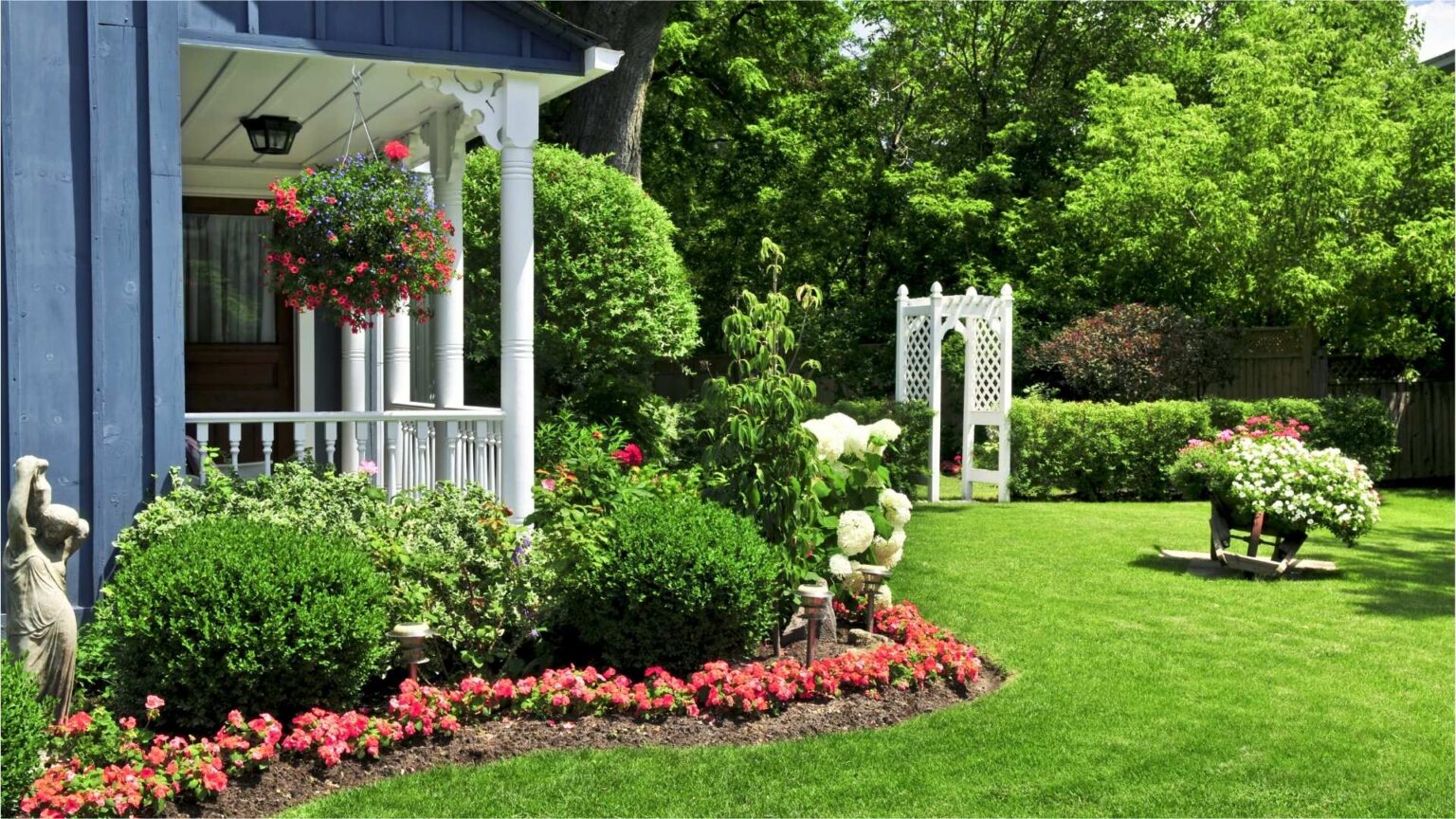
Foundation planting beds run along the front of the house, usually 4 to 5 feet (1.2–1.5 m) deep, with steel or block edging and a mix of evergreen shrubs and perennial plants. These beds carry roof runoff, so they need positive grade away from the foundation and often a discharge point tied into yard drainage.
Raised vegetable beds sit in back yards at 16 to 24 inches (40–60 cm) tall, built in cedar or steel, spaced 3 feet (0.9 m) apart for mower and wheelbarrow access. Height at that range removes most kneeling and keeps rabbits out without separate fencing.
Terraced beds on sloped lots use segmental retaining wall blocks to create 2 or 3 level planting shelves where a single grade would erode. Each terrace gets its own drainage stone and filter fabric behind the block.
Native plant and rain garden beds are placed at downspout outlets and low points, planted with switchgrass, little bluestem, coneflower, and swamp milkweed. These beds hold water for 24 to 48 hours after a storm and drain out rather than a pond.
Tips & Tricks
- Build beds at 4 feet (1.2 m) wide maximum for single-side access. Every foot beyond that invites stepping on soil, and compacted soil ends the drainage advantage the bed was built for.
- Test soil before amending. A pH reading and organic matter percentage from a lab costs a fraction of a season of failed plants.
- Buy soil and mulch in bulk cubic yards for any bed over 40 square feet. One cubic yard covers 100 square feet (9.3 m²) at 3 inches deep.
- Set drip irrigation before mulching. Retrofitting a line into a planted bed damages roots and takes twice the labor.
- Plant in odd-numbered groups of 3, 5, or 7 for a fuller look, and space by mature width rather than nursery pot size.
- Keep mulch off stems and trunks. Mulch piled against bark holds moisture, invites rot, and draws voles through winter.
- Schedule sod removal and bulk delivery for the same day. Open soil left exposed for a week grows weeds and washes out in rain.
- Check the Mount Prospect Park District demonstration plantings for plant combinations proven in local soil and exposure before committing to a plant list.
Testimonials
Client Success Stories
 Posted on Google
 Morris Lieberman
Trustindex verifies that the original source of the review is Google.
We never had a bad experience yet. Alex and Nikko have been very responsive and very easy to deal with.Posted on Google Jenny VitzileosI am beyond satisfied with the service I received from A&N! Boy, they went above and beyond what I thought they were going to do! So thorough even though I had a ridiculous amount of leaves and weeds. It was really difficult with the wind today yet they went back and did everything to make it as clean as possible. I gladly recommend A&N and plan on retaining them in the spring for regular service. One very happy customer 😊Posted on Google
 Gregory SuarezThe A&N team was great to work with from quote to completion of the job. They did quality work at a very reasonable price. I’d recommend them to anyone.Posted on Google
 John BahnickWe had A&N come by to do a fall cleanup. The crew that came by was very pleasant and did a great job.Posted on Google
 Jill OlligesDid a great job with our fall cleanup! Efficient and thorough. Will be using again!Posted on Google
 Andrew TFantastic group. Made my house look fantastic. This is my second season with them working on my yard and it's never looked betterPosted on Google
 Cynthia BalichArturo and Jerry were just here cleaning up all the leaves from what must have been the whole neighborhood covering our lawn and driveway. They were so quick and awesome and really friendly too. The lawn looks great and I didn't have to spend 5-10 business days raking it myself. Scheduling was great, and cost was very reasonable. Really happy with their services. I highly recommend.Posted on Google
 Eric BielatService was absolutely amazing. Will definitely use these guys every year for my fall cleanup!Verified by TrustindexTrustindex verified badge is the Universal Symbol of Trust. Only the greatest companies can get the verified badge who has a review score above 4.5, based on customer reviews over the past 12 months. Read more
Garden Bed Design & Hardscaping — Mt. Prospect, IL & Chicago
A&N Outdoor Services builds garden beds, retaining walls, and hardscape across Mount Prospect and the Northwest Chicago suburbs, including Arlington Heights, Des Plaines, Elk Grove Village, Prospect Heights, and Rolling Meadows. As a landscape contractor working in Cook County clay, the crew handles the parts a homeowner usually misses: subsoil loosening, drainage tie-ins, compacted aggregate bases under block and paver edging, and irrigation run before mulch goes down.
Garden bed installation cost in the 2026 Chicago-area market runs $15 to $25 per square foot for an in-ground bed with edging, soil amendment, and mulch, and $600 to $1,400 for a built and filled 4 ft × 8 ft raised bed, depending on border material and soil volume.
Call (224) 490-8510 or request a site visit for a measured quote on garden bed design, installation, and hardscaping at your Mount Prospect property.


